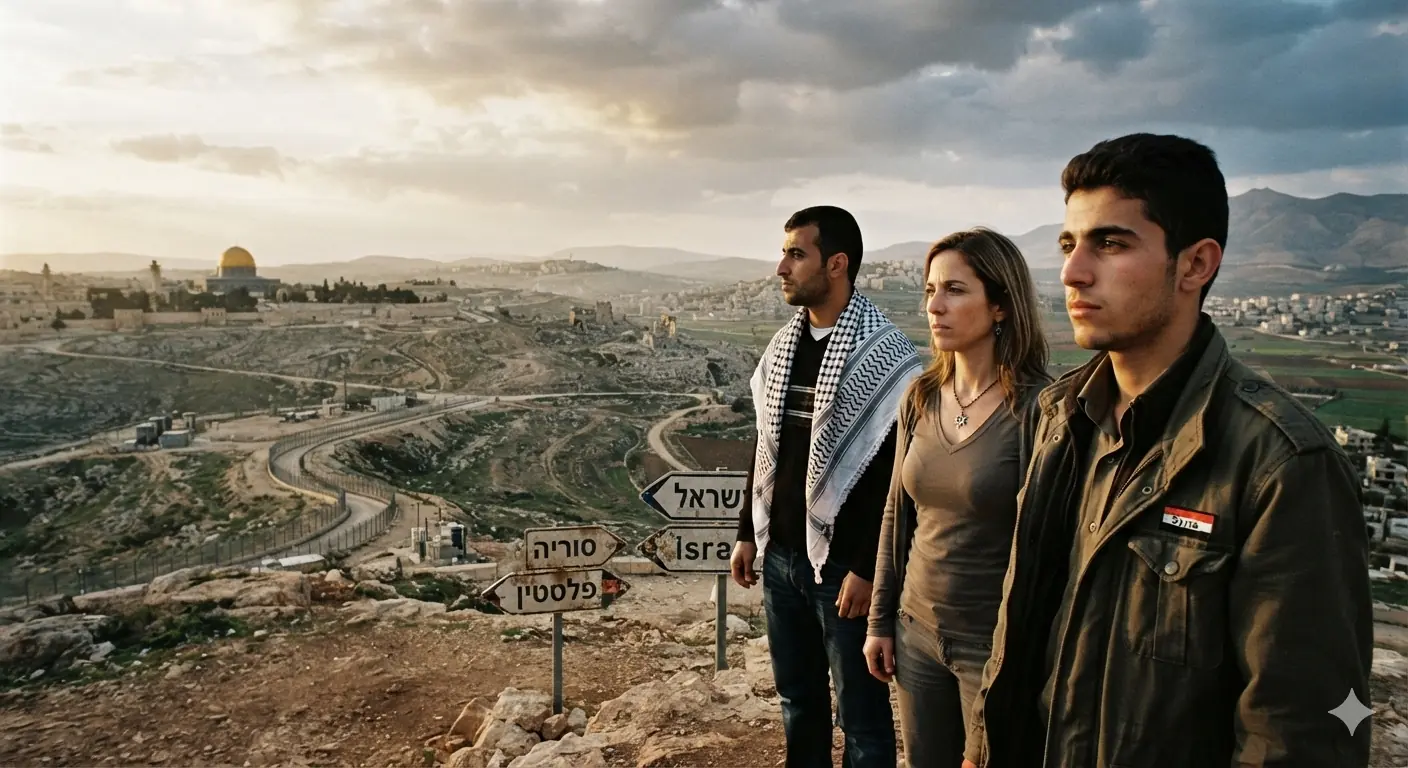
A question of Vision – Syria, Israel and the Palestinians
A question of Vision – Syria, Israel and the Palestinians.
The Discourse of Syrian Officials Toward Gaza and Palestine: Where Does the Path to Peace Stand?
The emergence of post-war Syrian President, Ahmed al-Sharaa came with some hopes of a changing direction in a country that was known as the “last bastion of Arab nationalism” in the Assad era. Rather than focusing on the “enemies around” and on the alliances with the “Axis of resistance,” the new Syria had sought to start a new, promising “peace with its neighbors” and respect to its minorities. In his address marking his appointment as transitional president (January 30, 2025), ah-Sharaa spoke about "the Syria that extends its hand with peace" and forming a "comprehensive transitional government, reflecting Syria's diversity." In a July 26, 2026 interview with Al Jazeera: Sharaa further said that Damascus "has no interest in conflict with Israel" and is "seeking to avoid one.’ Syria, he continued is working toward a security agreement with Israel that "could eventually pave the way for comprehensive peace between the two neighbors."
However, as the two year mark to the new administration approaches, new questions emerge about the country orientation and focus. Does the new Syria still seek to domestically focus on “making Syria great again” or, rather, on making sure that the new state will be able to give some old struggles a new platform?
In a recent event at the city of al-Ma'arra [المعارض] in Syria, chants and speeches by Syrian officials were observed in which they expressed solidarity with Gaza and support for the Palestinian cause. According to the circulating clips, these included phrases linked to the liberation of Palestine as well as threats targeting Jews and "Zionists." The chants occurred at an event attended by Ahmad al-Sharaa, alongside a number of Syrian officials and Arab figures and officials — raising questions about the nature of official Syrian discourse in the current phase, and how consistent it is with any declared move toward de-escalation, political settlement, or building relations based on peace.
A Recurring Discourse, and a Political Message in Question
What's notable is that this incident does not appear in isolation from another instance of rhetoric that emerged in recent months — one that likewise contained inflammatory language and threats to kill directed at Jews or Israelis. If the attribution of those statements to official Syrian bodies is accurate, this is a pattern worth pausing over, especially since similar rhetoric has come from more than one official body on different occasions. This raises a basic question: does such rhetoric represent an official position of the Syrian state, or is it merely popular political chanting tied to the occasion, not necessarily reflecting the government's foreign policy? The distinction matters, because there is a large difference between political expression of support for Palestinians and rejection of the occupation, and the use of language that threatens killing on the basis of identity or affiliation.
What Peace, Under a Discourse of Threats?
While regional and international parties speak of political settlements, agreements, and de-escalation, the more pressing question is: how can a path to peace be built under official or quasi-official discourse that includes threats to kill? Any political negotiation requires, before agreement on details, a minimum of mutual trust and the ability to offer guarantees to the other side. This raises further questions: what is the nature of the agreements or understandings being discussed regarding Syria and Israel? Does the rhetoric from some Syrian officials align with those understandings? Does the Syrian government regard these chants and speeches as an official position, or does it disavow them? If Damascus is pursuing a political or negotiating track, what message does it want to send to the Israeli side — and how can Israel be asked to withdraw or make security and political concessions while the other side is hearing public threats to kill from figures or bodies linked to state institutions?
Between Opposition to Israel and Incitement Against Jews
There is also an issue that cannot be ignored in any serious discussion of this rhetoric: the distinction between criticizing the Israeli government or Israeli policies, and targeting Jews as a religious or ethnic group. Rejecting the occupation, supporting Palestinian rights, and calling for a Palestinian state are all political positions expressible within political and legal frameworks. But turning the political conflict into rhetoric that targets Jews broadly, or threatens to kill them, is an entirely different kind of discourse — one that warrants political and media accountability. So the question isn't only about what was said in al-Ma'arra, but whether there has been a real change in official Syrian discourse, or whether the earlier rhetoric persists despite talk of a new phase and possible political solutions.
What Does Damascus Say?
In the end, the ball is in the Syrian government's court to clarify its position explicitly. If Damascus is genuinely moving toward political and security agreements or understandings, the public has a right to know: what are the limits of these understandings? What is the official position on speeches containing threats to kill? Does the government embrace this language, or reject it? The Israeli side, for its part, will undoubtedly raise security questions about what guarantees could be offered in the event of a withdrawal of its forces or new arrangements with Damascus. While political positions on the Gaza war and the Palestinian cause may remain widely contested, the shift from political rhetoric to threats of killing opens a far larger issue than a chant at an event. The real question is: if the proposed path is peace, understandings, and agreements, how can it be reached if the rhetoric from some officials continues to speak the language of threat and killing? Are we looking at emotional rhetoric tied to the Palestinian cause, or a deliberate political message that reflects the true position of the Syrian state?
credit:
Nir Boms
Abdullah al-Bunayyah